Full Circle: What a Summer at Courier Health Taught Me
A Courier Health engineering intern on rebuilding the Provider profile, shipping like a full-time engineer, and a summer that made the mission feel real.

Close to a year ago, I remember heading back to the University of Michigan for welcome week and relieved to be back on campus and not at work anymore. I remember sitting with my friends, catching up on our summers, jobs, and the cities we'd been living in. One story stuck with me: a friend talked about his summer in NYC, interning at a 50-person startup with a mission that actually meant something to him. That startup was Courier Health!
The Company
Coming from my last internship at a large tech company, the one constant I was used to at work was structure. Day in and day out, things operated the exact same, planned precisely. The sprint was intentionally decided months in advance, the backlog was micro managed, and engineers were always given exact details on tickets. One of the best parts of interning at Courier Health is the fact that there is opportunity to shape how things are done and have immediate impact.
I got to see the engineering department refine effective scrum practices, backlog refinement and sprint planning meetings as the company and R&D org continues to grow. I watched the product team iterating on their innovation roadmap, and I saw my PM become the first responder for our team's constant influx of issues and feature requests. Seeing this evolution taught me so much about how companies operate from a much broader perspective, and it was fascinating to watch the struggles and wins from our first sprint to our fifth.
But the number that stuck with me most wasn't 23 new customers or 60 new hires. It was hearing directly from a customer about how our platform had helped someone get a life-changing therapy, someone who didn't even know they were eligible for it. That's when the mission behind all the growth stopped being a “bullet point on a slide” and it became tangible and real.
The Job
That mission is what I got to spend my summer working towards directly. I was given the opportunity to work on the revamp of a large page on our platform. For context, Field Access or ReimbursementManagers (FRMs) are the in-person link between a drug manufacturer and a doctor's office as they work directly with provider staff to untangle insurance coverage, prior authorizations, and copay assistance, so a patient can actually start, and stay on, the therapy they've been prescribed.
On our platform, these FRMs mainly live in the Provider profile, which holds everything relevant to a provider, such as contacts, patient lists, documents, forms, and more. Over the summer, I worked across four different tabs of this page (Patients, Analytics, Documents, Forms) each with its own set of challenges. Along the way, I built new components for our library, revamped modals platform-wide, picked up frontend skills I hadn't had going in, and even optimized parts of the page for iPad, since FFMs are often pulling this up on a tablet between patient visits, not sitting at a desk.
As an intern at Courier, there's no single project you work on for the whole summer; instead, you're treated like a full-time engineer, working through tickets on epics alongside other full-time engineers. You're responsible for scoping your own tickets, coordinating intended functionality with your PM (shoutout Sabrina!), and implementing it. If you ran into a bug or a flawed user experience, it was on you to bring it up to your team, help determine its priority, and fix it. The whole idea of an internship program is to simulate the full-time experience, and I think Courier's internship genuinely accomplishes that.
The Incident
During one of my tickets, I was working on the Forms tab, a feature where users create therapy-specific form templates that can be filled out and assigned to patients or providers. While consolidating this logic into shareable components across different profile pages, I introduced a bug: a GraphQL request was silently skipped whenever a patient wasn't on multiple therapies. After the release, a user couldn't see any forms for single-therapy patients, which triggered a high-priority ticket to our on-call engineer.
As an intern, I was freaking out. This was a bug I had missed during development, and it had made it all the way to production. But over the next few days, my mentor, manager, and a few other engineers all told me the same thing: acknowledge it, learn from it, and use it to sharpen how I test and ship code going forward, instead of beating myself up over it. From that point on, I made sure to run extensive stage testing on every new feature I built, catching edge cases before they ever had the chance to reach production.
The Culture
Looking back, that moment ended up being a perfect encapsulation of the culture at Courier Health as a whole. People here treat each other like family, constantly offering to help without even being asked. I remember Chris L., one of our senior engineers, offering to huddle for a while so that I could untangle a data-populating script I'd been stuck on for hours. Another time, Andy, a fellow intern, spent twenty minutes with me just to fix a z-index issue that had been driving me crazy. It didn't matter if you were a senior engineer or another intern, everyone showed up for each other.
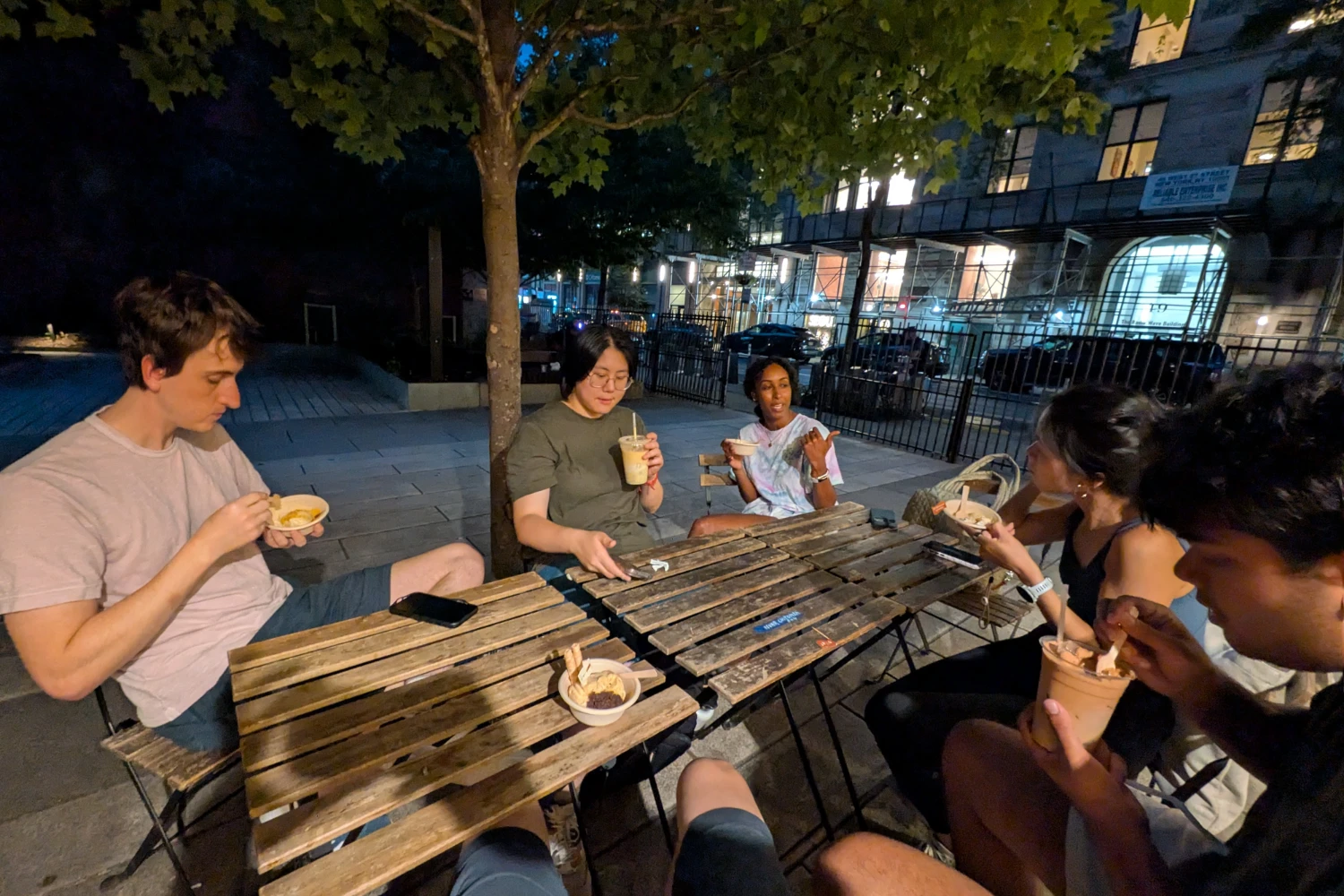
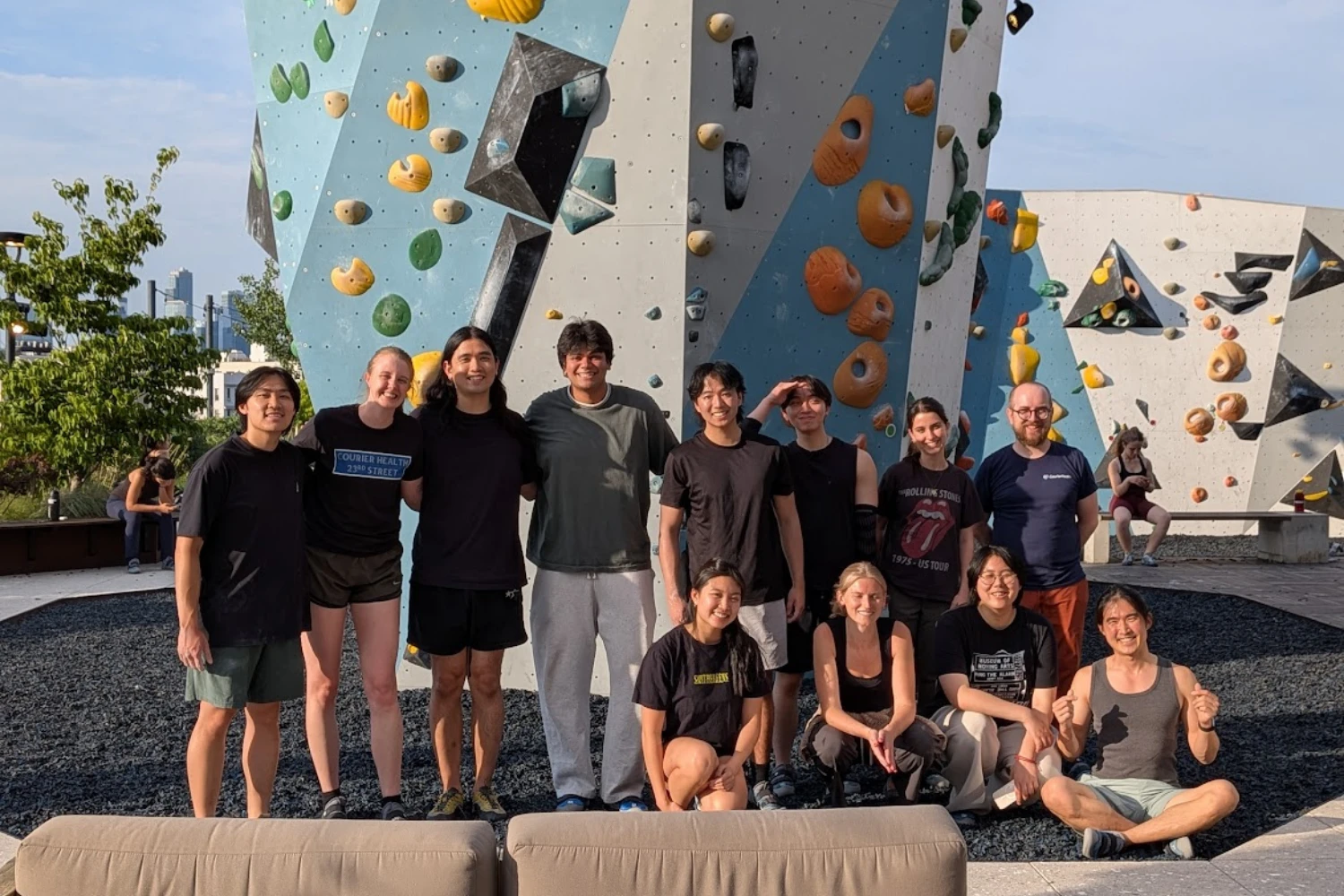
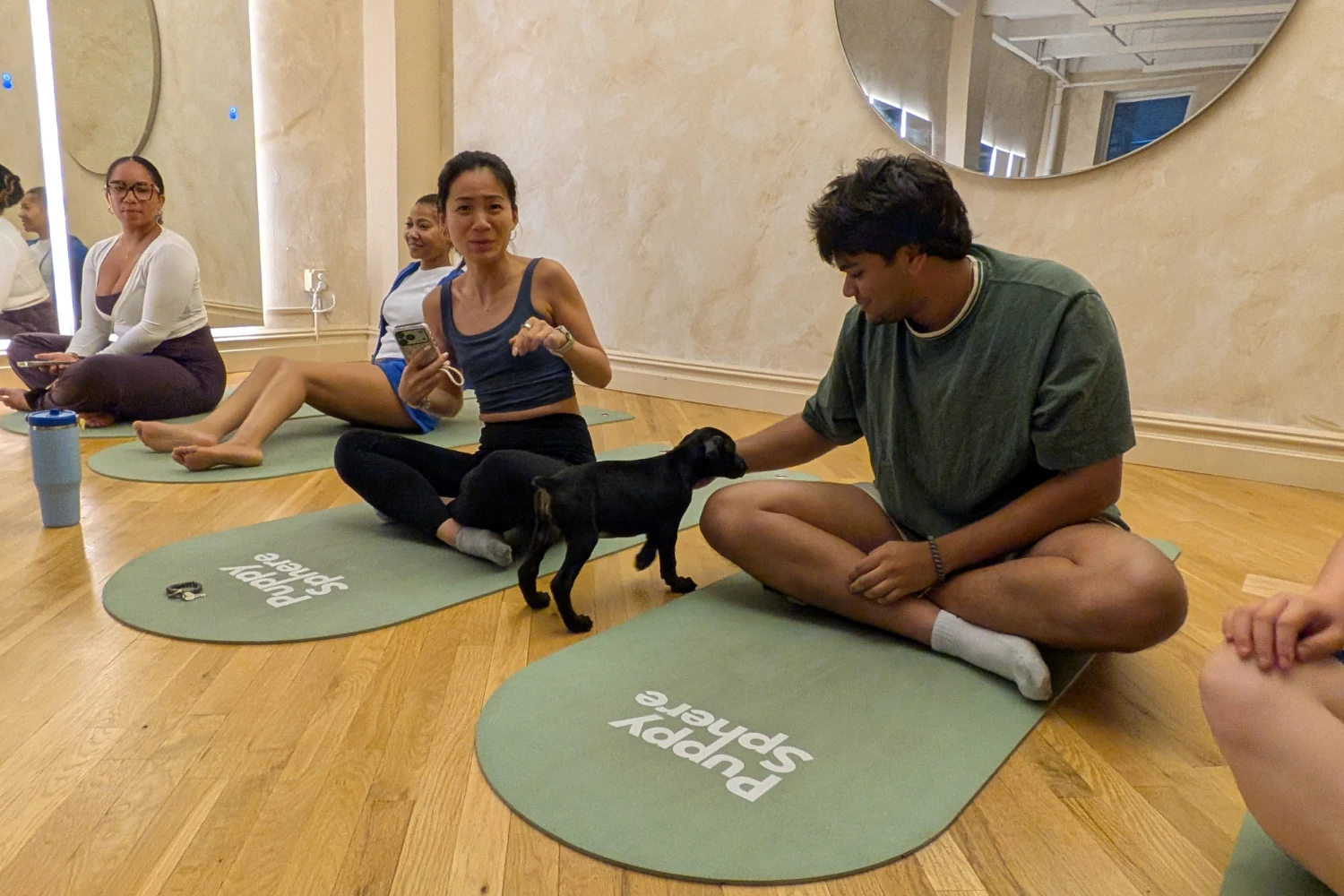
That same energy carried outside of work, too. It was normal to regularly catch up with teammates over coffee, not to talk about tickets, but just to see how everyone was doing. Courier Health didn't just want us to be good coworkers, they wanted us to actually know each other, and that intention showed up everywhere, from puppy yoga, to a Lego build night, an ice cream social, and even a rock climbing night. My mentor, Hanbin, even set up meetings between all the new engineers and every other department, just so we could understand what everyone else at the company actually did. It made Courier feel like the 40-person startup it once was, even as it keeps growing. By the end of the summer, I didn't just know my teammates' names, I knew their weekend plans, their families, their pets, and I see myself staying in good touch with them in the future.
The End
It feels like a full circle moment now. In a few days, I'll be heading back to Ann Arbor for welcome week again, just like I was this time last year. Except this time, I'm not relieved to be leaving. I'm dreading it, not because I don't want to be back at school, but because I don't want to leave this office, or these people, behind.
Keval Botadra is a rising senior at the University of Michigan studying Computer Science.